
Data Center Development: The Numbers I Check Before Trusting the Timeline
A site, 100 MW and delivery in 2028 are not enough to qualify a project. Here is how I bring together IT capacity, CAPEX, grid connection and customer requirements to understand what can actually be delivered.
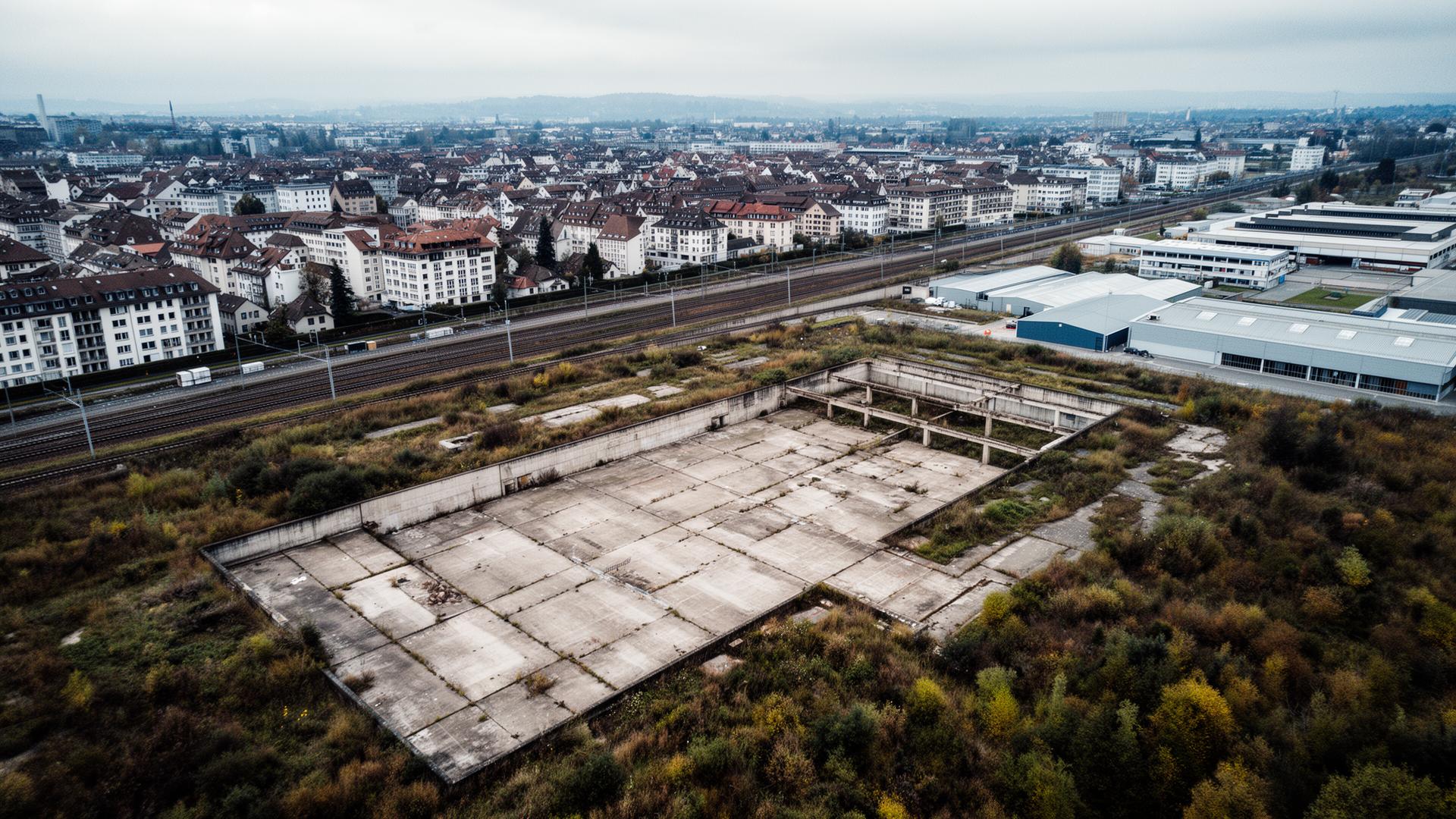
100 MW of power. 20 hectares of land. Delivery in 2028. These are the figures you can put on the first page of a project brief to convey its ambition immediately. But they do not yet tell me what a customer will be able to use, or when they will be able to start operating their equipment.
When I assess a data center development opportunity, I therefore come back quite quickly to the first phase. What capacity can we deliver? What supports the proposed delivery date? How much investment is still required? And, above all, does that first delivery meet the needs of an identifiable end user?
That is the perspective I want to share here. The calculations below are illustrative examples with deliberately explicit assumptions. They do not describe any client project and should not be treated as market pricing benchmarks. The images are illustrative and unrelated to these numerical scenarios.
Electrical capacity and IT capacity: I start by clarifying the megawatts
When someone presents a 30 MW site to me, I need to know which megawatts they mean. Capacity at the grid connection and power available to the servers are not interchangeable. Cooling, electrical losses and building auxiliaries all need to be accounted for.
Take 30 MW of fully usable electrical capacity, with a total-power-to-IT-power ratio of 1.25 at the operating point being assessed. That gives 24 MW IT, because 30 divided by 1.25 equals 24. The remaining 6 MW cover the other loads. On the same basis, a ratio of 1.20 would give 25 MW IT, compared with approximately 23.1 MW IT at 1.30.
That difference alone shows why I want to understand the assumptions before quoting a capacity figure in a commercial presentation. It is not, by itself, enough to size a facility. Annual PUE, which measures total energy consumption relative to IT energy consumption, does not guarantee the IT power available under peak conditions. The designer must check the reference temperatures, auxiliary loads, margins and constraints of the chosen architecture.
I also distinguish between the capacity requested from the grid operator, the capacity secured under contract and the capacity that will actually be made available. For me, a figure becomes useful when it is tied to a document, a date and clear conditions.
A delivery date needs a contractual definition
“Available in 2028” usually leaves me with more questions than answers. There are eleven months between January and December. And the same date might refer to site energisation, building handover, completion of testing or the customer's acceptance of the facilities.
I therefore try to reconstruct the path to actual operations. Site control, permits, the grid connection, equipment orders, construction and testing all need to converge. The longest sequence, or the one with the least secure dependencies, can determine the entire timeline.
The economic impact is easy to illustrate. Imagine a 10 MW IT phase, equivalent to 10,000 kW IT, fully contracted at a hypothetical fee of €100 per kW IT per month, excluding electricity. If all that capacity becomes billable at handover, it represents €1 million per month and €12 million over twelve months.
A six-month delay would then defer €6 million of billing compared with the original schedule. That does not automatically mean the revenue is permanently lost. The consequences depend, among other things, on the contract term, rent commencement provisions, termination rights and any penalties. But the cash requirement may arise well before the question of total contract revenue has been resolved.
That is why I want to see the technical programme and the business plan develop together. Moving a date in one document should produce the corresponding adjustments in the other.
Data center construction costs: the first MW can cost more than the average
CAPEX per MW IT is a useful metric, provided you know what it includes. I check whether the scope covers land, the grid connection, design and engineering, technical equipment, testing and contingencies. I also check whether the customer's servers and network equipment are excluded. Two ratios are only comparable if their scopes are comparable.
Phasing then deserves particular attention. Take a hypothetical 40 MW IT campus developed in four 10 MW phases. Assume that €20 million of shared infrastructure is required at the outset and each phase then costs €60 million. The first delivery requires €80 million, or €8 million per MW IT. At full build-out, the campus costs €260 million, averaging €6.5 million per MW IT.
Presenting only the final average would hide an important part of the initial investment picture. In this example, the initial cost per MW is approximately 23% higher than the average for the completed campus. That is not an anomaly. It follows from the investment schedule and the progressive sharing of infrastructure costs.
For the first phase, I therefore want to understand the amount that actually needs to be financed and the timing of cash outflows. The savings expected from later phases must remain conditional on those phases actually being delivered.

AI infrastructure: 10 MW does not tell you how many racks a facility can accommodate
Total capacity is not enough to establish whether a data center is suitable for artificial intelligence. A 10 MW IT hall theoretically corresponds to 1,000 racks at 10 kW, 200 racks at 50 kW or 100 racks at 100 kW, assuming all the power is allocated to those racks.
These calculations are not layout plans. They do, however, show how the same total capacity can conceal very different requirements. Equipment density affects electrical distribution, cooling, technical space and maintenance access.
When a project is described as AI-ready, I want to know which configuration that claim refers to. What density can it support? Across what proportion of the racks? At what temperatures and flow rates for liquid cooling, where required? What adaptations are still needed to accommodate the customer's equipment?
I prefer to clarify these points before commercial negotiations. Capacity that can technically be adapted and capacity that is immediately ready for a specific configuration do not come with the same timeline or budget.
Modular delivery has to shorten the overall programme
I am interested in modular approaches because they can help organise development around more targeted initial capacity. They allow us to consider the pace of deployment, the use of repeatable equipment and the relationship between orders and customer demand.
But I always distinguish the module's manufacturing lead time from the time needed to commission the data center. The site needs to be prepared, foundations and utility networks built, power made available, cooling integrated and the complete installation tested.
If a module is ready before the grid connection, that manufacturing head start does not automatically translate into earlier commercial operations. Conversely, initial power availability can be valuable if the rest of the project genuinely allows it to be used.
I look at that entire sequence. I also want to understand how extensions will be built alongside the first operating halls. Modularity has to work in the programme, on site and in day-to-day operations.
What makes me move forward with a project
At the end of this analysis, I am looking for a fairly simple answer. If an end user wants to proceed, can we explain what we will deliver, how we will deliver it and which conditions still need to be secured?
A 60 MW IT campus may have considerable potential. But if the immediate requirement is for 6 MW, followed by another 6 MW two years later, I start by examining that sequence. It gives us a concrete product to discuss, along with its investment requirements and constraints.
That is what I try to bring through The Blob Company: connecting land, grid access, design, financing and commercialisation. These issues directly affect one another. A customer requirement can change the phasing. An electrical constraint can change the product offered. An excessive upfront investment in shared infrastructure can make the first phase harder to launch.
I am not looking for a project brief in which every uncertainty has disappeared. I am looking for a project whose assumptions are clear enough for everyone to understand what they are committing to. In my view, that is when the megawatts and delivery date on the first page begin to have real value.
To discuss site qualification, data center phasing or commercial positioning: matthieu.gallego@the-blob-company.com.
Work with us
Need this level of analysis on your own pipeline
We advise developers, investors and operators on powered land, grid strategy and data center demand — from site qualification to commercialisation
Related analysis
Data centre delays should change how projects are valued
A deliverable 40 MW IT phase can be a stronger investment than a speculative gigawatt campus. Matthieu Gallego argues that valuations and acquisition payments should follow verified power, customer and commissioning milestones.
3 countries, 3 different ways to structure a data center project
France, Poland and the UAE require different development sequences. Power, permits, phasing and customer demand determine the right approach for each project.
Powered land is the new scarce asset
Grid capacity, not construction capacity, now sets the pace of data center delivery in Europe. Powered land has become the binding constraint of the AI build-out.