
Data centre delays should change how projects are valued
A deliverable 40 MW IT phase can be a stronger investment than a speculative gigawatt campus. Matthieu Gallego argues that valuations and acquisition payments should follow verified power, customer and commissioning milestones.
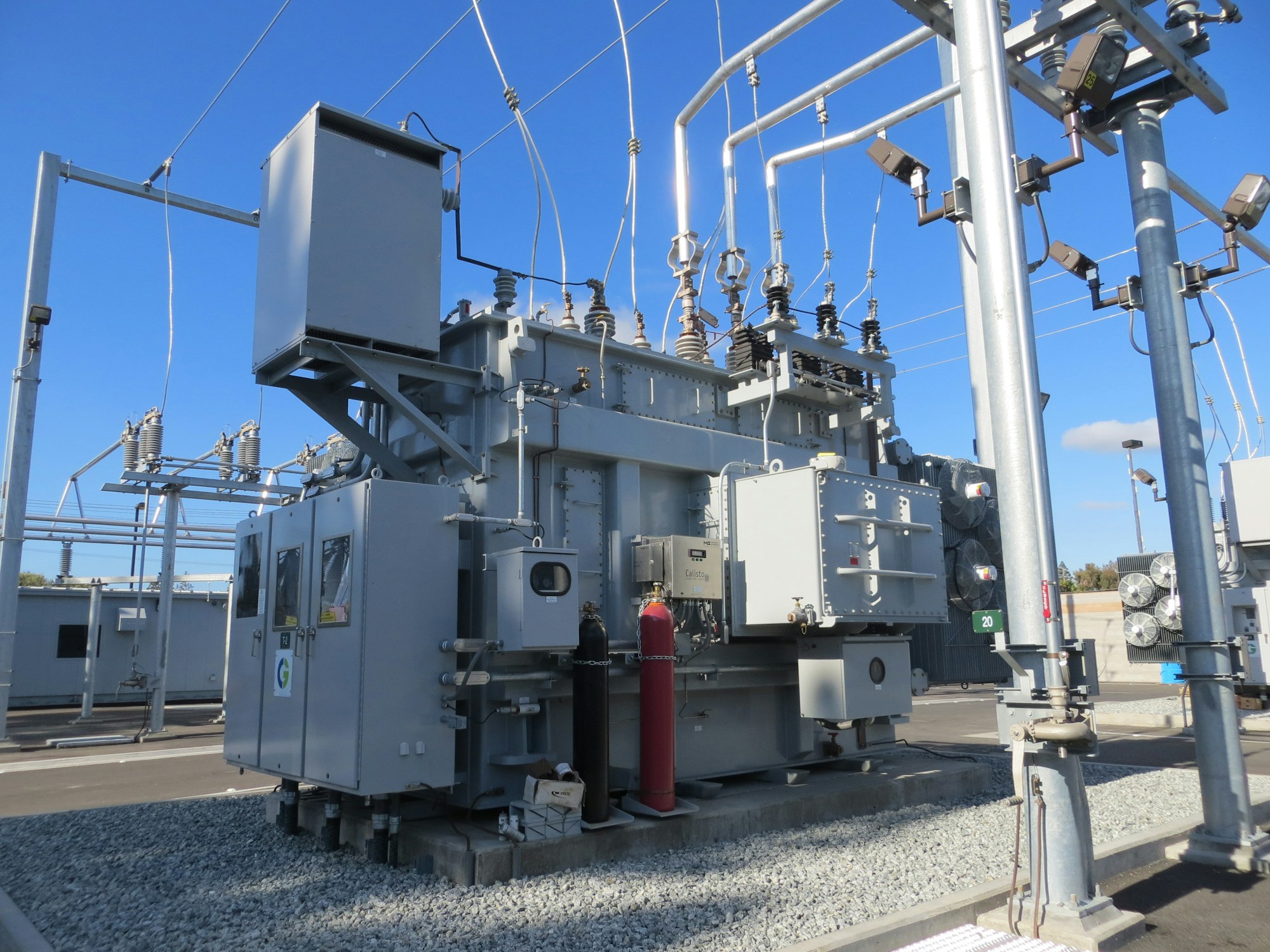
Cover photograph: an electrical transformer at a substation. Photo: American Public Power Association / Unsplash, used under the Unsplash License. Illustrative photograph; it does not depict any of the projects discussed below.
I would prioritise a 40 MW IT project with an executable power connection, a customer commitment and a credible commissioning programme over a gigawatt campus whose first delivery date depends on unresolved infrastructure. That is the investment discipline I believe the data centre market now needs. Developers should earn higher valuations as they remove delivery risk. Investors should stop paying in advance for milestones that remain outside the developer’s control.
What the delay graphic gets wrong
A graphic headed ‘50 largest data center projects delayed’ puts the combined value above $396 billion and capacity above 41 GW. It is an effective provocation. It is not a reliable basis for an investment conclusion. The image provides no visible source trail, valuation methodology or consistent definition of delay. Several entries aggregate multiple sites. Its final row, ERCOT Batch Zero, is an electricity connection process covering many projects. Adding that row to individual Texas developments creates a risk of counting the same capacity twice.
The problem goes beyond presentation. The graphic labels Microsoft’s Mount Pleasant development ‘paused’, with an indefinite delay. On 23 June 2026, Microsoft announced that its first facility there was fully operational, following equipment startup in April. It also said construction of the second facility was continuing, with completion scheduled for 2028. A campus can have an operating first phase and a later expansion programme. One status cannot describe both accurately. 1
Abilene requires the same care. Crusoe announced on 30 September 2025 that the first phase of the Stargate campus was running on Oracle Cloud Infrastructure, with early training and inference workloads already under way. That does not establish that every subsequent phase met its original schedule. It does establish why a single ‘behind schedule’ label tells us too little about delivered capacity. 2 ERCOT, meanwhile, described Batch Zero in June 2026 as a joint study process for qualifying large loads of at least 75 MW. It is not a single data centre development. 3
I would therefore keep the $396 billion figure out of a market sizing model until its underlying project records can be reconciled. Announced expenditure, construction financing, IT hardware purchases and eventual campus investment are different measures. A six-month shift in one building’s delivery does not put the whole campus budget at risk of permanent loss. Treating those numbers as interchangeable makes a serious execution problem harder to understand.
The grid clock and the building clock
There is already enough credible evidence to take that problem seriously. In its 2025 Energy and AI report, the International Energy Agency estimated that grid constraints could delay around 20% of global data centre capacity planned for construction by 2030. This was a forward-looking risk estimate, not a finding that one fifth had already been delayed. Its Electricity 2026 report describes a basic timing mismatch: planning, permitting and completing grid infrastructure can take five to fifteen years, compared with one to three years for data centres. Those ranges are contextual, not project schedules, but they explain why a building programme can outrun its power supply. 4 5
Demand growth has continued alongside those constraints. The IEA reported in April 2026 that data centre electricity demand increased by 17% in 2025. It also identified tightening supply chains for transformers, gas turbines and IT equipment. 6 My reading is that strong aggregate demand and weak individual development economics can coexist. A tenant can urgently need compute while rejecting a particular location, price or delivery date. Sector growth does not validate every land acquisition.
Value the power that can actually be delivered
This is where I take issue with valuing an early project mainly by multiplying its proposed megawatts by a transaction benchmark. The first question should be what those megawatts represent. A grid application, an executed connection agreement, an energised import capacity and commissioned IT capacity describe different stages of development. Each carries different obligations and remaining costs. A price per MW that ignores those distinctions can transfer years of unresolved risk to the buyer without paying the buyer to take it.
For each phase, I would require the proposed IT capacity to be traced to the electrical supply actually available under the intended operating configuration. Gross generation nameplate capacity must be reconciled with auxiliary consumption, site conditions, maintenance and redundancy. The corresponding cooling and network systems must support the customer’s required workload. Any proposed expansion should have its own dates and evidence. A technically impressive campus masterplan cannot compensate for an unproven first revenue phase.
Project Jupiter: construction progress and power risk
Project Jupiter in New Mexico illustrates how separate workstreams can create a misleading impression of progress. In a statement on 14 September 2026, Oracle said the data centre campus and proposed microgrid were separate facilities on adjacent sites. It said the microgrid’s air permit proceeding had been stayed, while the buildings were being constructed under separate county permits. That is Oracle’s account of the permitting position, rather than an independent legal assessment. 7 The development lesson is straightforward: visible building work does not, by itself, establish that the energy system needed to operate the building is ready.
The contractual consequences are equally revealing. Reuters reported on 24 September, citing a person familiar with the matter, that Oracle had issued a force majeure notice over potential power delays at Jupiter. Blue Owl said the notice did not change its financial commitments. 8 Oracle and STACK subsequently stated on 30 September that the project remained on their planned schedule. 9 These statements should be presented together. They support scrutiny of risk allocation, without establishing the graphic’s precise six-month delay.
That distinction matters to an investment committee. A programme risk can exist before a sponsor revises its public completion date. The financial effect depends on the contracts. Who carries interest while power is unavailable? Which event starts rent? Can the customer reject a partially delivered phase? What happens if the building contractor meets its obligations but an upstream substation does not? The documents should answer those questions consistently. Passing a risk to a party with neither control over it nor the balance sheet to absorb it is a weak form of protection.
The cost of a six-month delay
Consider a deliberately simplified illustration, unrelated to any named project. Assume 100 MW of contracted IT capacity is due to start billing at $150 per kW per month, excluding electricity. A six-month postponement defers $90 million of gross capacity revenue: 100,000 kW multiplied by $150 and six months. That is not $90 million of lost profit. Operating costs, the contractual ramp and any extension of the lease term determine how much value is actually lost. The distinction between deferred revenue and permanently lost revenue must remain visible in the model.
Now assume $600 million of debt is already drawn and remains outstanding through that same six-month period at 8% annual interest. Interest accruing during those months is $24 million, before fees or compounding. These are illustrative assumptions, not market benchmarks. How much is incremental depends on the original repayment schedule and any extension of the borrowing period. The cash-flow model must distinguish interest already in the base case from additional financing costs. Adding $24 million mechanically to deferred gross revenue would not produce a valid estimate of the project’s valuation loss.
I would also model a smaller first delivery and a customer withdrawal, alongside a simple date shift. These outcomes create different funding requirements. A building that opens with half its contracted capacity may carry substantial fixed costs before it earns full revenue. A replacement customer may require a different cooling configuration or network architecture. The relevant downside is the cost of recovering the project, including the time required to find someone willing to use it.
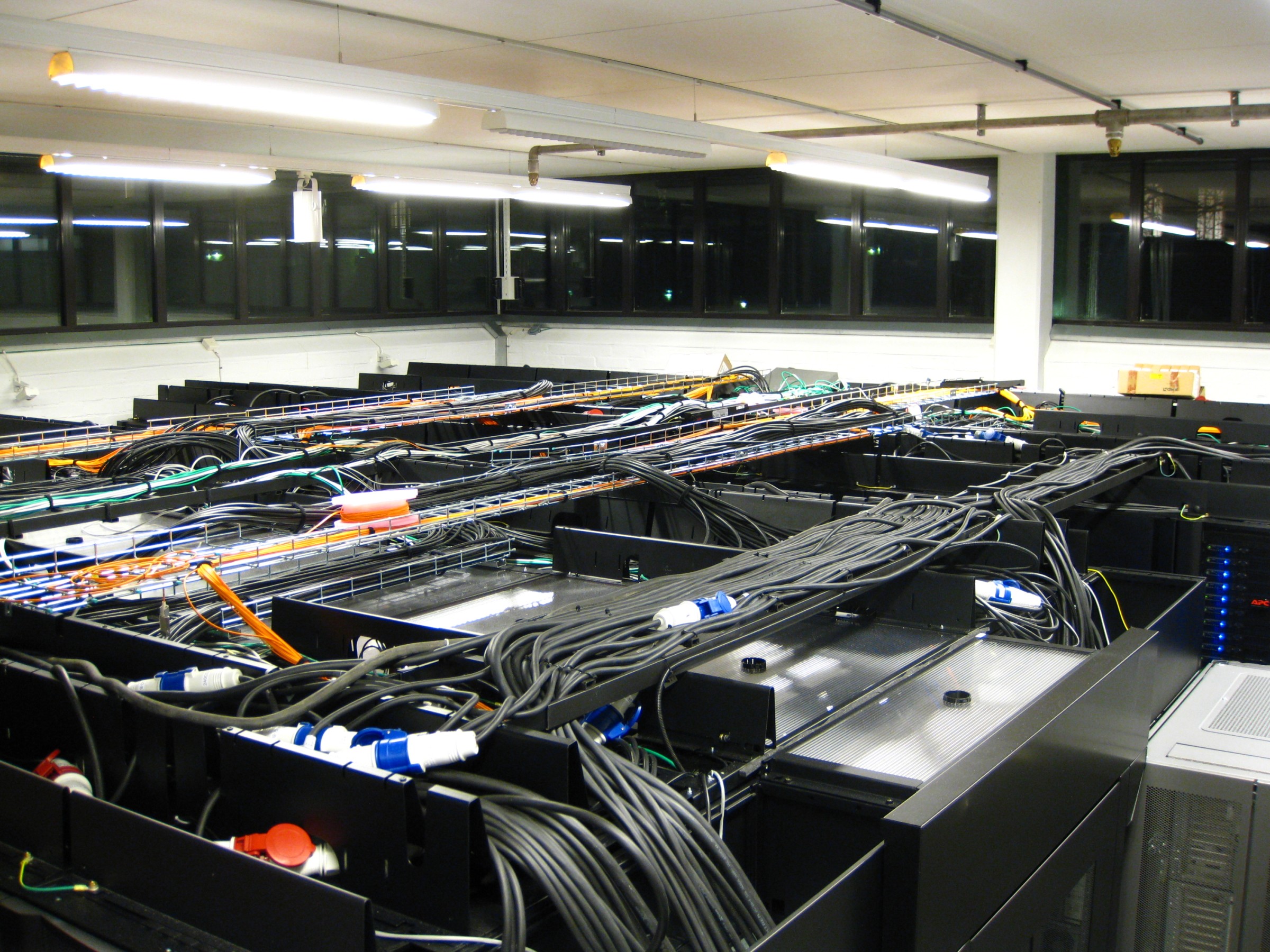
Photo: Johan Fredriksson (Esquilo) / Wikimedia Commons, CC BY-SA 3.0. The original photograph is reproduced without alteration.
Onsite power brings its own dependencies
Onsite generation can improve a delivery plan, but it deserves the same scrutiny as the grid connection it is intended to replace. In March 2026, Crusoe announced a new Abilene campus for Microsoft with a 900 MW onsite power plant. The same announcement specified two buildings designed for 336 MW of critical IT load each, or 672 MW combined. The 900 MW and 672 MW figures describe different parts of the project. 10 That distinction should be routine in development presentations.
The engineering challenge also changes when an operator becomes dependent on dedicated generation. Fuel delivery, generating equipment availability and load response become part of the data centre’s operating proposition. The IEA’s April 2026 assessment notes that rapid, large changes in AI demand can stretch onsite gas plants’ technical capabilities and increase the importance of batteries. 6 My requirement would be a demonstrated operating design, with maintenance and failure scenarios tested against the customer’s service requirements. A power plant purchase order does not settle those questions.
I would apply the same discipline to descriptions of ‘temporary’ power. The financial model should state how long the temporary solution can legally and commercially operate, what it costs at realistic utilisation, and what happens if the permanent supply slips again. Where gas is proposed as a bridge, its delivery chain and operating permissions need their own programme. Calling it temporary does not remove its dependencies. The sponsor must show that it improves the overall delivery probability after those dependencies are included.
Phasing only works when a phase can operate
This leads to a practical preference for phases that can operate independently. If an initial 30 or 40 MW IT block can be supplied, commissioned and accepted without waiting for the entire campus, it deserves a separate investment case. Later phases can follow verified power milestones and customer commitments. There is a price for this approach: duplicated infrastructure, smaller procurement packages and additional operational interfaces can increase unit costs. That price should be compared with the financing exposure of waiting for a much larger first delivery.
Phasing has limits. A customer seeking a tightly integrated training cluster may need a large contiguous deployment with a common network architecture. Several small facilities cannot simply be presented as an equivalent substitute. A genuinely independent first phase also requires more than a separate building. Its substation, cooling system and commissioning path must be sufficiently independent of later works. Otherwise, the apparent phase boundary does little to protect its revenue date.
Europe’s advantage must be demonstrated
For European developers, the opportunity is to be more selective about where the first phase can work. The IEA’s November 2025 analysis reported grid connection waits ranging from two to ten years across EU countries, and seven to ten years in established FLAP-D hubs. These are broad market observations, not guarantees for individual sites. 11 They make local electrical deliverability a central site-selection question. A country’s attractive generation mix or annual power balance does not establish spare capacity at a particular substation.
I would give brownfield opportunities serious attention where the existing connection and building can shorten the route to an acceptable operating facility. But that advantage must be demonstrated. The continued use of the connection, the proposed load profile, structural capacity and the cost of adapting the building all need evidence. An old industrial connection can be valuable. It can also sit behind conditions that make the proposed data centre use uneconomic. Existing infrastructure deserves a premium only to the extent that it removes future work and uncertainty.
Community concerns belong in that assessment from the start. A sponsor should be able to explain who funds the network works and how local users are protected from costs created by the development. Water demand and noise need site-specific engineering answers. I would treat those answers as inputs to the design and commercial model. Leaving them to a communications exercise after the preferred scheme has been fixed makes later redesign more expensive and weakens the credibility of the promised timetable.
Pay for milestones as they are achieved
My proposed change to investment practice is specific. Value the first deliverable phase using its own operating cash flows and remaining capital requirements. Value later phases separately, using scenarios that reflect their unresolved dependencies. Where several phases rely on the same upstream reinforcement, the downside model must recognise that common exposure. A portfolio of sites waiting on one network upgrade offers less diversification than its project count suggests.
Acquisition payments and development funding should follow evidence of progress. A buyer can pay for land control and genuine development work without paying the full price of eventual operating capacity. Additional consideration can become due when agreed connection, permitting or delivery milestones are achieved. The exact structure will depend on bargaining power and the asset, but the principle is sound: the party claiming that a milestone is highly probable should retain some economic exposure to achieving it.
Reporting should change too. A pipeline report should let an investor distinguish proposed ultimate capacity from capacity contracted for delivery, under construction, energised and accepted by a customer. Each material revision should identify the affected phase, the previous baseline and the unresolved dependency. That information is more useful than a single total for delayed investment. It allows capital to move towards projects whose risks are understood and whose next milestone is achievable.
At The Blob Company, my view is that the strongest development proposition is a dated commitment supported by documents and an operating design. I would pay more for evidence that removes a genuine obstacle to delivery, and leave more of the price contingent where major dependencies remain. If a seller wants to be paid today for a gigawatt of future capacity, the burden is on that seller to demonstrate how each phase becomes usable infrastructure.
Sources
- 1.Microsoft: Microsoft completes construction on first datacenter facility in Mount Pleasant Wisconsin (23 June 2026).
- 2.Crusoe: Crusoe announces flagship Abilene data center is live (30 September 2025).
- 3.ERCOT: PUCT approves ERCOT Batch Zero process for connecting large electricity users (18 June 2026).
- 4.International Energy Agency: Energy and AI — AI and energy security (2025).
- 5.International Energy Agency: Electricity 2026 — Grids (2026).
- 6.International Energy Agency: Data centre electricity use surged in 2025 even with tightening bottlenecks driving a scramble for solutions (16 April 2026).
- 7.Oracle: Project Jupiter statement on construction permitting (14 September 2026).
- 8.Reuters — Isla Binnie and Jaspreet Singh: Oracle triggers force majeure on data center project over power delays source says (24 September 2026).
- 9.Oracle and STACK Infrastructure: Project Jupiter statement on Southern New Mexico floods (30 September 2026).
- 10.Crusoe: New 900 MW AI factory campus in Abilene Texas to support Microsoft AI infrastructure (27 March 2026).
- 11.International Energy Agency: Overcoming energy constraints is key to delivering on Europe’s data centre goals (16 November 2025 — corrected 25 November 2025).
Further reading
AI Investment and the Value of Data Center Projects
Data Center Development: The Numbers I Check Before Trusting the Timeline
Explore The Blob Company’s development management services.
Work with us
Need this level of analysis on your own pipeline
We advise developers, investors and operators on powered land, grid strategy and data center demand — from site qualification to commercialisation
Related analysis
Data Center Development: The Numbers I Check Before Trusting the Timeline
A site, 100 MW and delivery in 2028 are not enough to qualify a project. Here is how I bring together IT capacity, CAPEX, grid connection and customer requirements to understand what can actually be delivered.
3 countries, 3 different ways to structure a data center project
France, Poland and the UAE require different development sequences. Power, permits, phasing and customer demand determine the right approach for each project.
Powered land is the new scarce asset
Grid capacity, not construction capacity, now sets the pace of data center delivery in Europe. Powered land has become the binding constraint of the AI build-out.