
What to Expect from Data Centre World Paris 2026
France’s data centre opportunity will be delivered through land agreements, grid connections, permits and customers. Here is what to test at Data Centre World Paris 2026 before committing capital.

Cover photograph: Paris Digital Park, La Courneuve, 8 October 2026. Guallendra / Wikimedia Commons, CC0. Illustrative photograph, not a view of the event.
Data Centre World Paris 2026 takes place on 18–19 November at Paris Expo Porte de Versailles, Hall 5, within Tech Show Paris. The published programme, checked on 20 October and subject to change, opens with France’s AI, colocation and hyperscale ambitions.
For investors, developers, operators, landowners and infrastructure partners, the test is practical. Can those ambitions become infrastructure that can be financed, connected, built and operated? We expect the most valuable conversations to expose the dependencies between French land, grid access, consents and customers.
France’s opportunity starts at the site boundary
SoftBank’s May 2026 announcement targets 5 GW of French AI data centre capacity and investment of up to €75 billion, with an initial 3.1 GW phase planned in Hauts-de-France by 2031. These are the company’s stated ambitions, not commissioned capacity or evidence that all financing and connections are secured. It should not be treated as a construction-only budget.
France’s low-carbon electricity supports its proposition. Availability at a particular substation, on a particular date, remains a separate question. The opening market discussion matters because national enthusiasm must translate into local network studies, controlled land and a credible consent timetable.
A landowner’s asking price should therefore reflect what has been secured. A promesse de vente should be assessed against its conditions, expiry date, access for surveys and rights for connection infrastructure. If land control expires before critical grid or planning decisions, the development strategy carries a financing risk before construction begins.
Read the French connection documents
Identify the relevant network operator: RTE for transmission, or Enedis or the local distribution undertaking for distribution. An electricity supply offer does not reserve network capacity.
For RTE connections, distinguish an exploratory study, an accepted proposition technique et financière, or PTF, and a signed convention de raccordement. RTE’s connection process explains how the convention incorporates further studies and administrative procedures. Review its scope, payment milestones, dependencies and operating conditions, alongside the required network access and operating agreements.
The investment case needs answers on reinforcement works, substation land, cable easements and responsibility for approvals beyond the plot. What can the first phase receive? What works release later capacity? Who bears delay costs? Any temporary supply or operating restriction must be compatible with the customer’s service commitment.
Grid connection MW, usable IT MW and annual electricity consumption are different measures. Facility losses and cooling affect the power available to IT; utilisation determines energy consumed over time. RTE’s 2025 review describes gradual demand ramp-up and explains that operating demand can remain below requested connection capacity. Requested capacity should never be presented as immediate consumption.
Energisation is also distinct from readiness for service. The programme must allow for commissioning, integrated testing and customer acceptance after power becomes available.
Treat French permitting as a development workstream
The first planning conversation should establish how the proposed use is classified under the applicable PLU or PLUi, France’s local or intermunicipal planning document. Confirm allowable use, height, setbacks and space for substations, cooling equipment and emergency access. Engage the mairie or intercommunalité before fixing the layout. For conversions, change-of-destination requirements need assessment against the proposed works.
Map the permis de construire separately from environmental requirements. The ICPE regime for classified installations requires examination of equipment and activities, including generators and fuel storage; IT megawatts alone do not establish the authorisation route. Identify applicable water, ecology and environmental assessment requirements early with the competent services, including DREAL or DRIEAT in Île-de-France.
Where an environmental authorisation is required, a building permit generally cannot be implemented before it is obtained, subject to narrowly defined exceptions. A permit application, an issued permit and a consent with relevant challenge periods addressed represent different investment positions.
These distinctions belong in the financial model. Align land commitments, studies, equipment orders and construction notices with the actual consent pathway. Political support is valuable; lenders still need evidence of enforceable rights and residual risks.
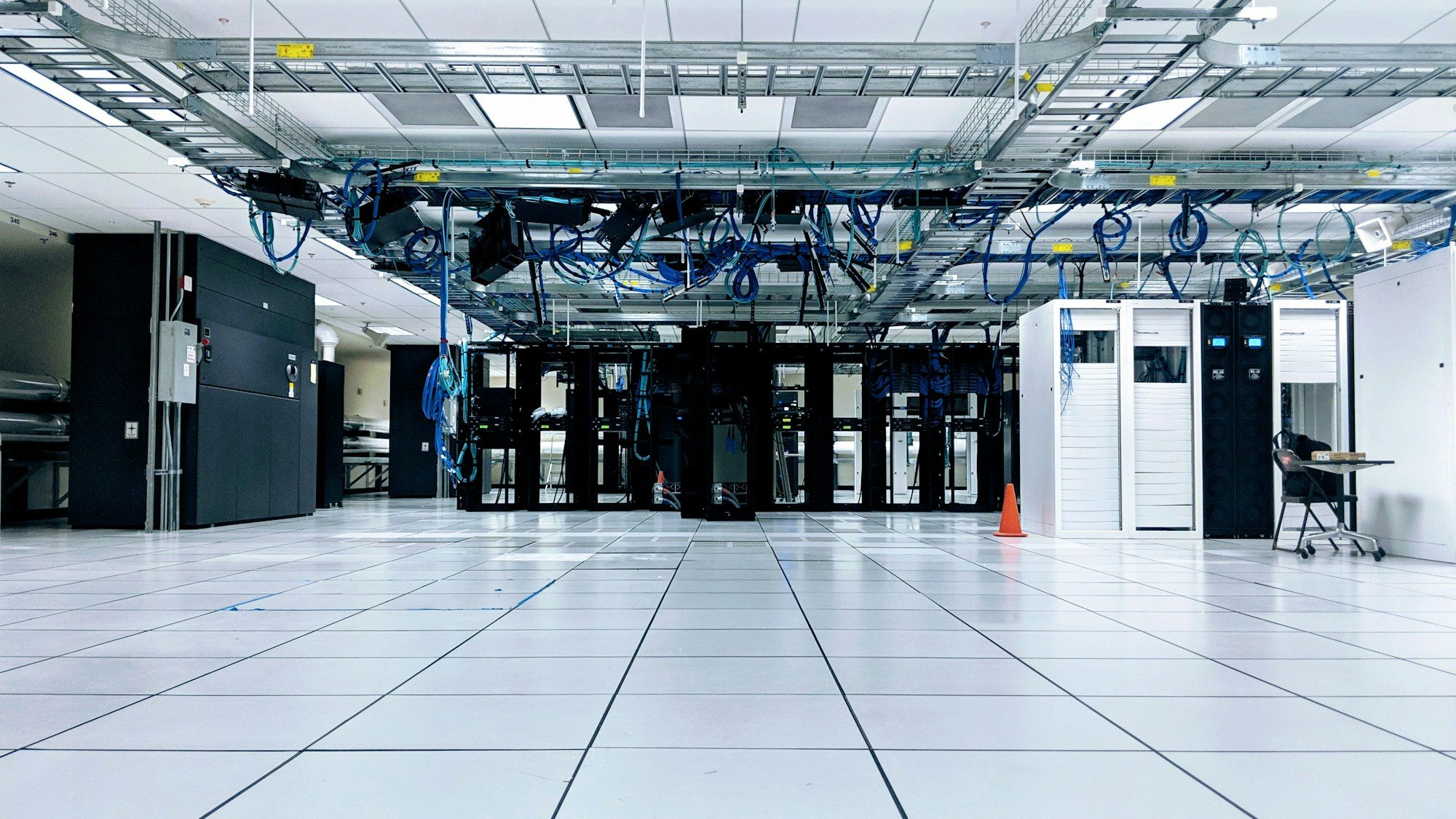
Photo: Taylor Vick / Unsplash, Unsplash License.
AI readiness must survive the French site constraints
The programme’s discussion of AI cooling deserves attention because it connects customer architecture with building and operating costs.
Start with rack density assumptions, electrical distribution, server-to-facility cooling interfaces, heat rejection, maintainability and commissioning criteria. Then test them against the French site: summer operating conditions, available water, acoustic limits and permitted plant space. A cooling change can affect both procurement and the consented design.
Training, inference and conventional colocation do not share one specification. Latency, network topology and deployment patterns vary, including within each category. The customer’s actual architecture should determine the requirements.
Unclear specifications create commercial exposure. Who funds redesign after equipment orders? Can the facility accommodate changing IT requirements without stranded investment or operational restrictions? An AI-ready claim deserves a documented operating envelope and an explanation of adaptation costs.
Regional France needs an executable proposition
The scheduled urban and rural locations debate should help readers judge where customer requirements and infrastructure align beyond established hubs.
A timely example is Google’s proposed development at the ZAC d’Ozans in Étrechet, Indre. RTE states that preliminary public consultation will run from 2 November 2026 to 10 January 2027 and cover both the data centre and its electricity connection. This is an early development stage, not an approval or operational capacity. Its relevance is the integration of campus and network infrastructure into the public discussion.
Regional sites must demonstrate diverse fibre routes, suitable latency, customer demand, skills, planning compatibility and supporting local infrastructure. Cheap land cannot compensate automatically for missing connectivity or costly off-site works.
For brownfield opportunities, establish what can genuinely be reused. Building geometry, structural capacity, demolition, contamination and continued occupation can change the economics. An industrial connection requires operator confirmation against the new use and contractual arrangements. Retaining a building needs a measured cost, schedule and environmental case.
Let customer commitments determine the first phase
The programme’s financing, design and construction discussion matters because these decisions are inseparable in a French development budget.
Define the product: powered land, a powered shell, fitted colocation or computing services. Hyperscalers, established colocation operators, enterprises and neoclouds can each support credible projects. Assess the actual counterparty’s credit, binding commitments, deployment schedule and technical acceptance requirements. Category labels cannot establish bankability.
Phasing can align expenditure with uptake while preserving expansion. Reserve the necessary land, plant space and infrastructure routes, and explain what later phases require from the grid and authorities. A smaller first phase is useful only if it operates effectively and does not compromise the expansion case.
Comparisons in euros per MW require scope reconciliation. Are the megawatts IT or utility capacity? Do costs include land, grid reinforcement, redundancy, cooling, contingency and IT equipment? Omitting off-site works or assuming reusable infrastructure can make a French site appear cheaper without improving its economics.
Environmental credibility must be local and measurable
PUE, the ratio of total facility energy to IT energy, needs context: water use, electricity emissions, utilisation and actual heat reuse. Separate design targets from operating evidence.
For a French heat network proposition, involve the relevant local authority, network operator and heat customer early. Who needs the heat, at what temperature, over what distance and in which seasons? Who pays for the connection and temperature uplift? Recoverable heat becomes community value only when a viable receiving system exists.
The European Commission’s September 2026 measures reinforce the need for evidence. Existing reporting obligations already apply. The rating regulation adopted on 21 September remains under Parliament and Council scrutiny as of 20 October, before entry into force, with first labels expected in 2027. Consultation on future minimum performance standards runs until 14 December 2026; those standards are not yet requirements.
Local acceptance also turns on land, noise, water and infrastructure impacts. Credible commitments should influence design and expenditure while changes remain possible.
Leave with evidence that changes decisions
The Blob Company believes France’s opportunity deserves disciplined development. Prioritise meetings that resolve a dependency, test a specification or substantiate a customer commitment. Take five questions:
- What power is contractually secured, and under which conditions?
- What usable IT capacity can the first phase deliver?
- Which unresolved dependency controls the delivery date?
- What customer commitment supports the development scope?
- What evidence supports the environmental and local value proposition?
The Blob Company welcomes discussions on site qualification and power strategy, commercialisation and owner representation, from initial land assessment through development and delivery planning.
Work with us
Need this level of analysis on your own pipeline
We advise developers, investors and operators on powered land, grid strategy and data center demand — from site qualification to commercialisation
Related analysis
Compare ton data center à… un ferry Corsica Ferries — Épisode 1
Depuis la plage, un ferry semble écraser le paysage. Mais face à un data center de 20 MW IT, lequel pèse réellement le plus lourd en construction, en exploitation et sur son environnement ?
Data centre delays should change how projects are valued
A deliverable 40 MW IT phase can be a stronger investment than a speculative gigawatt campus. Matthieu Gallego argues that valuations and acquisition payments should follow verified power, customer and commissioning milestones.
AI Investment and the Value of Data Center Projects
AI growth does not guarantee the value of every project. Matthieu Gallego examines secured power, delivery timelines and qualified demand, supported by PowerlandMap intelligence and external sources.